Primary User Flow
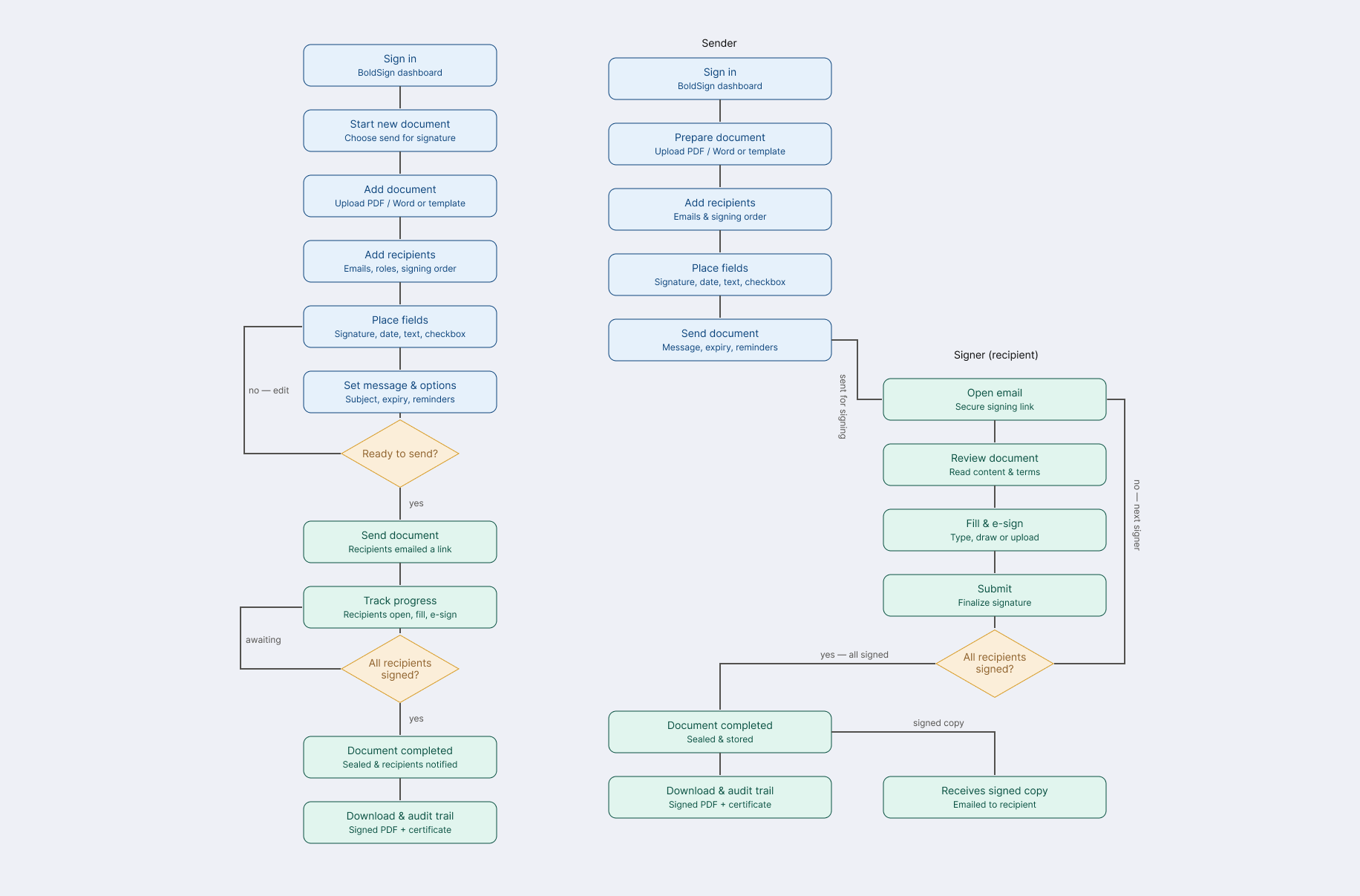
Sending a Document

A Modern eSignature Platform for Enterprise Teams
Designing a fast, reliable eSignature platform from the ground up — one that makes preparing, sending, and signing documents feel effortless for both senders and recipients, while meeting the security and compliance bar enterprise teams expect.
This case study captures the full lifecycle of a 0→1 product : from early concept exploration to MVP launch and beyond. It’s not a one-minute scroll. It’s a detailed look at how I shaped the strategy, design, and execution of a real-world electronic signature platform.
BoldSign is a cloud-based electronic signature platform that enables businesses to send, sign, and manage legally binding documents digitally.
As the Lead Product Designer, I was responsible for designing the core product experience across multiple modules, ensuring the platform remained simple for everyday users while supporting the complex requirements of enterprise organizations.
I worked closely with Product Managers to translate business requirements into scalable user experiences and collaborated with engineering throughout implementation using Syncfusion's existing design system.
Businesses were rapidly transitioning to digital document workflows, yet many organizations still relied on email attachments, printed contracts, and manual follow-ups to complete agreements.
Existing eSignature solutions offered extensive functionality, but everyday workflows often felt overwhelming — especially for teams handling large volumes of documents.
The opportunity was to create an enterprise-ready platform that simplified document management without compromising flexibility, security, or scalability.
As the Lead Product Designer, I owned the end-to-end design of BoldSign, from product discovery through delivery.
Rather than starting with interface design, I worked closely with Product Managers to understand the business goals, customer expectations, and product direction.
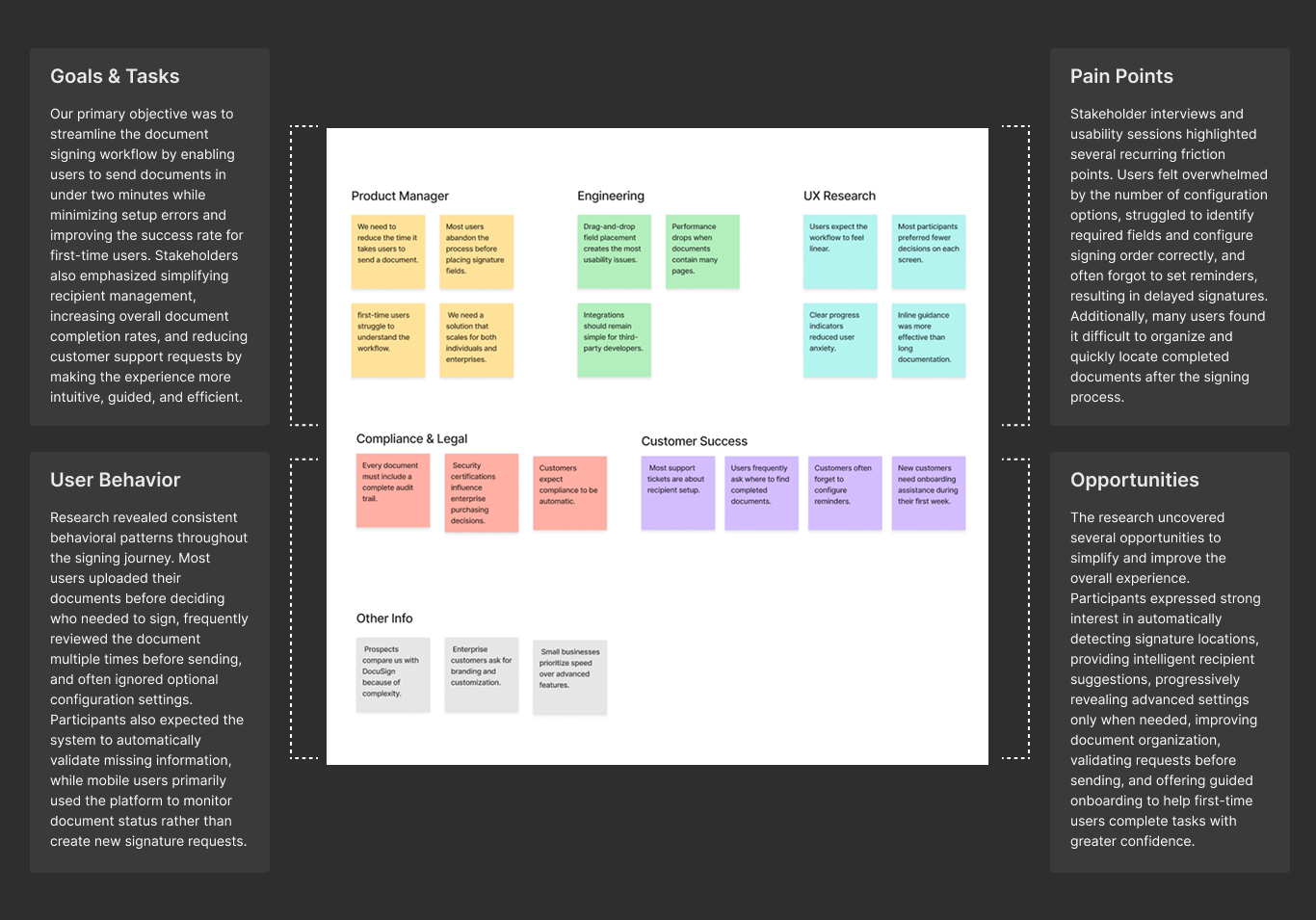
The discovery phase focused on identifying workflow inefficiencies and understanding how existing solutions approached document signing.
So, we started with a "Design Sprint"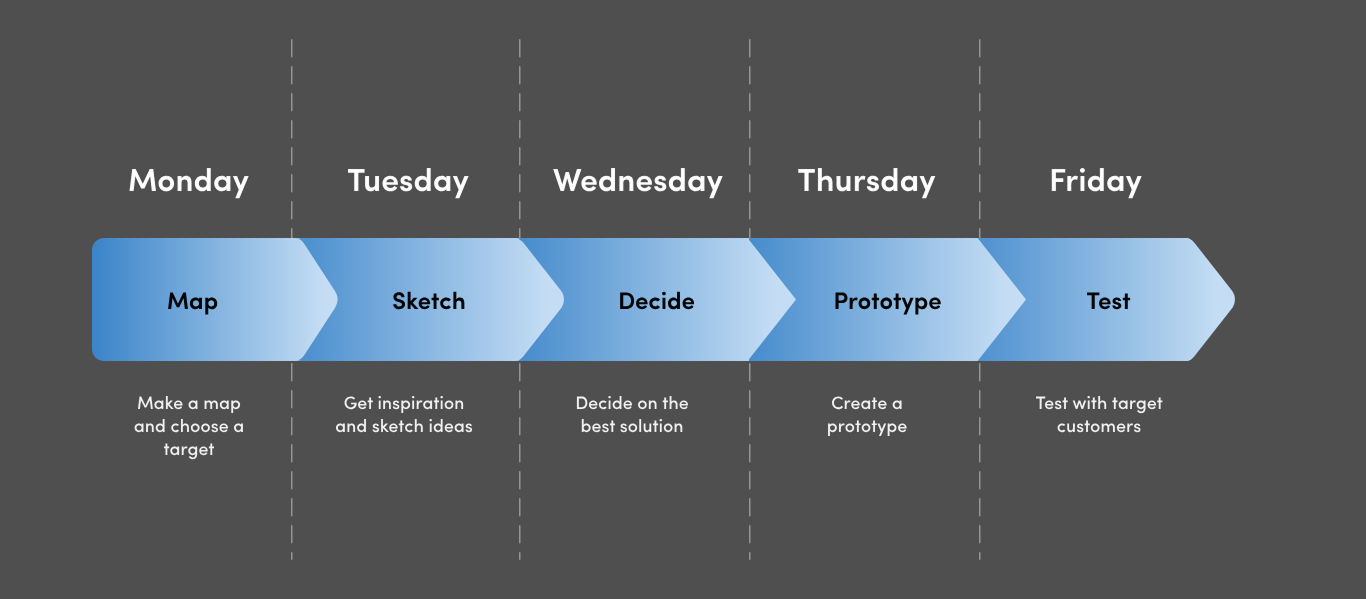
To better understand the market, we evaluated leading electronic signature platforms and compared their core workflows.
| Product | Strength | Opportunity |
|---|---|---|
| DocuSign | Mature enterprise ecosystem | Simplify document preparation |
| Adobe Acrobat Sign | Trusted security & compliance | Reduce complexity |
| Dropbox Sign | Simple signing experience | Better administrative workflows |
| PandaDoc | Rich document management | Streamline high-frequency tasks |
Key Takeaways: Rather than competing by adding more features, we focused on improving the workflows users performed most frequently. Our goal was to reduce complexity while maintaining the flexibility enterprise customers expect.
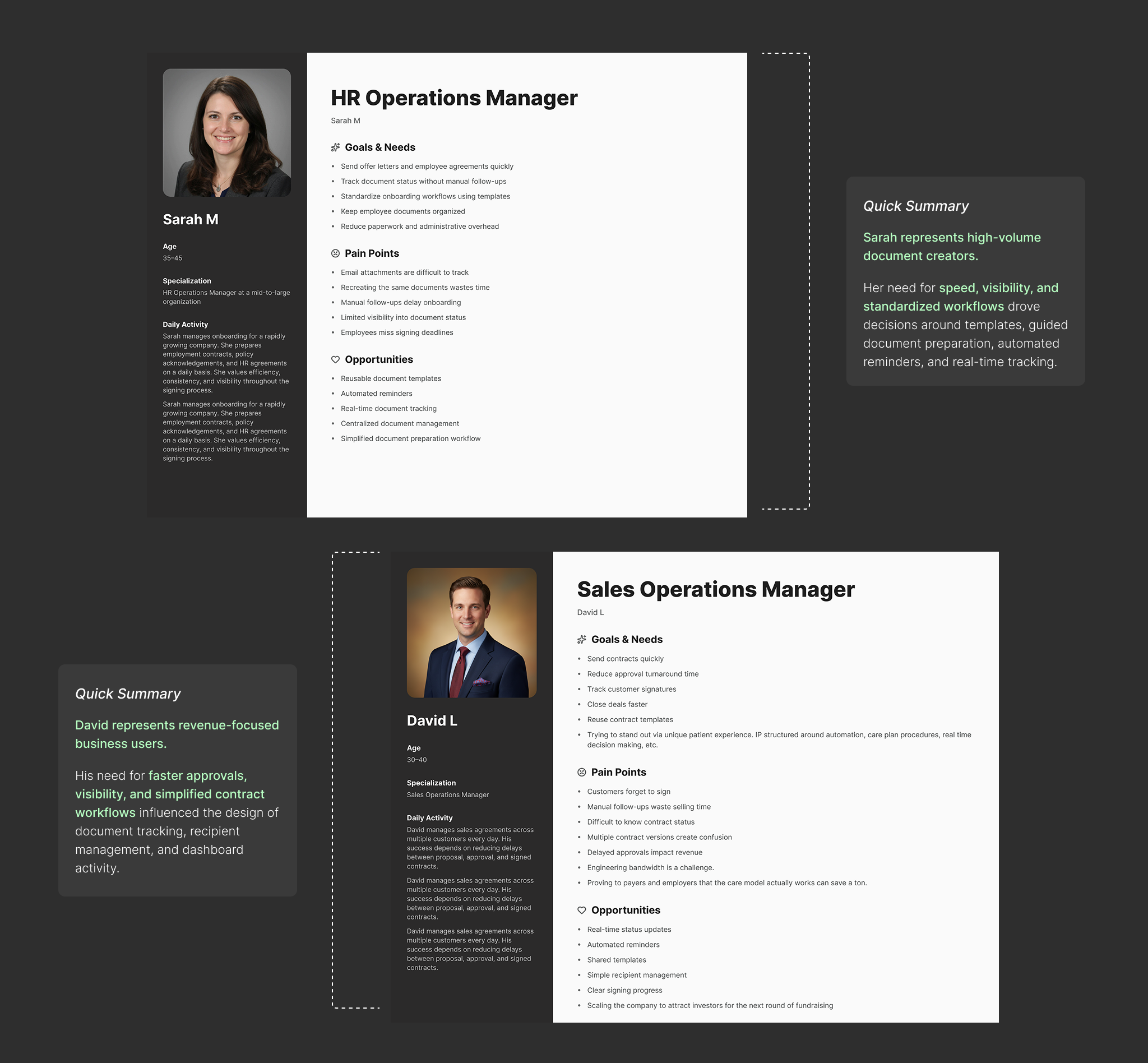
Success looks like: Preparing, sending, and tracking employee agreements within minutes while maintaining complete visibility throughout the signing process.
Preparing documents required too many manual steps.
Users struggled to understand document status without repeatedly checking emails.
Frequently used agreements were recreated instead of reused.
Growing organizations needed better team administration and permission management.
Every design decision was guided by four principles.
Break large tasks into clear, manageable steps.
Keep users informed throughout the document lifecycle.
Reduce repetitive work through reusable templates.
Support individuals today while enabling enterprise growth tomorrow.
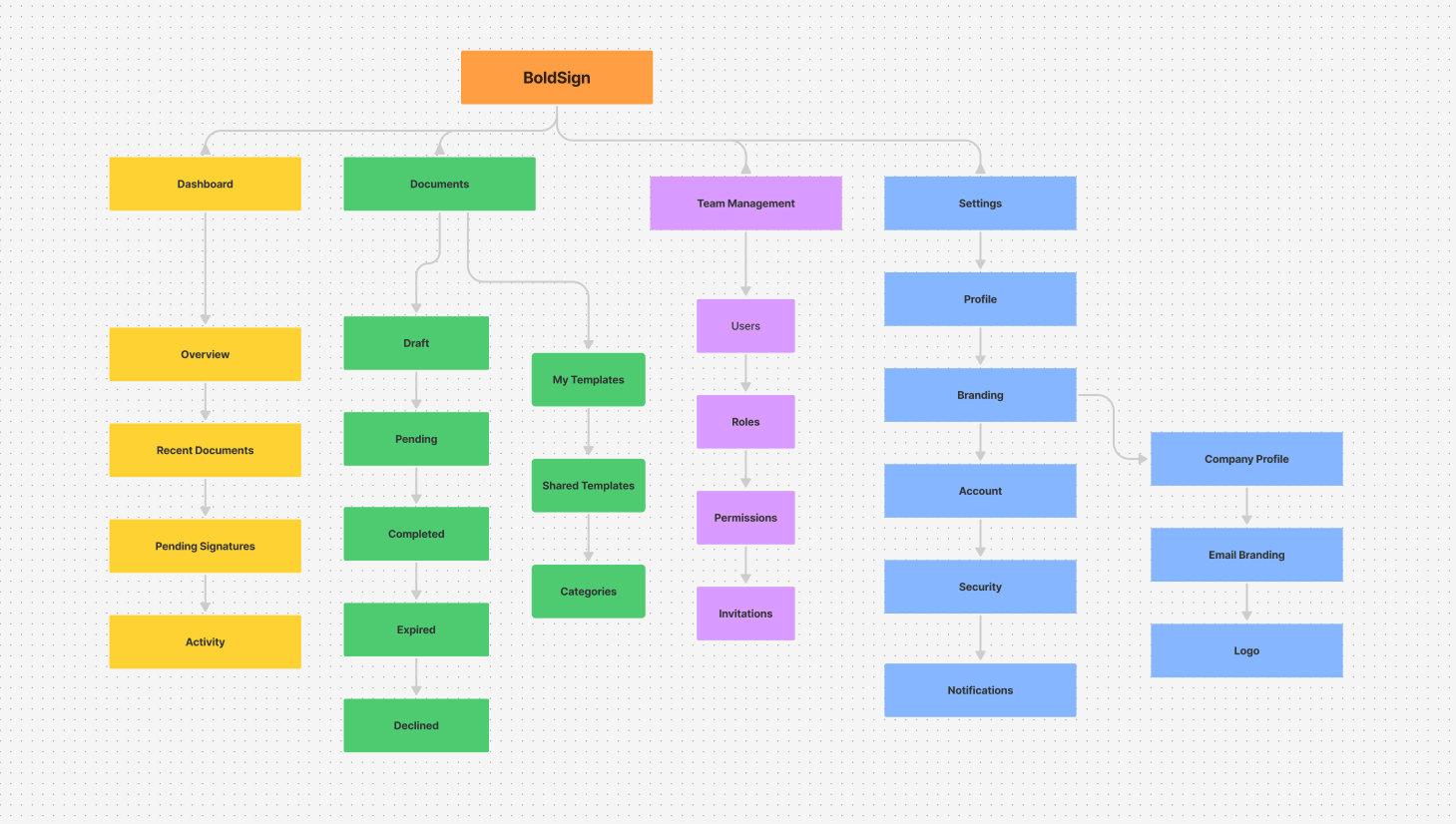
Documents broke down further into Draft, Pending, Completed, Expired, and Declined — giving users a clear status for every agreement.
Why this structure? Most users spend the majority of their time managing documents rather than configuring the platform. Grouping navigation around high-frequency workflows made the product easier to learn while supporting future feature expansion.
Multiple concepts were explored before finalizing the experience. Areas of exploration included:
Every iteration was reviewed with Product Managers and engineering teams to balance business goals, usability, and technical feasibility.
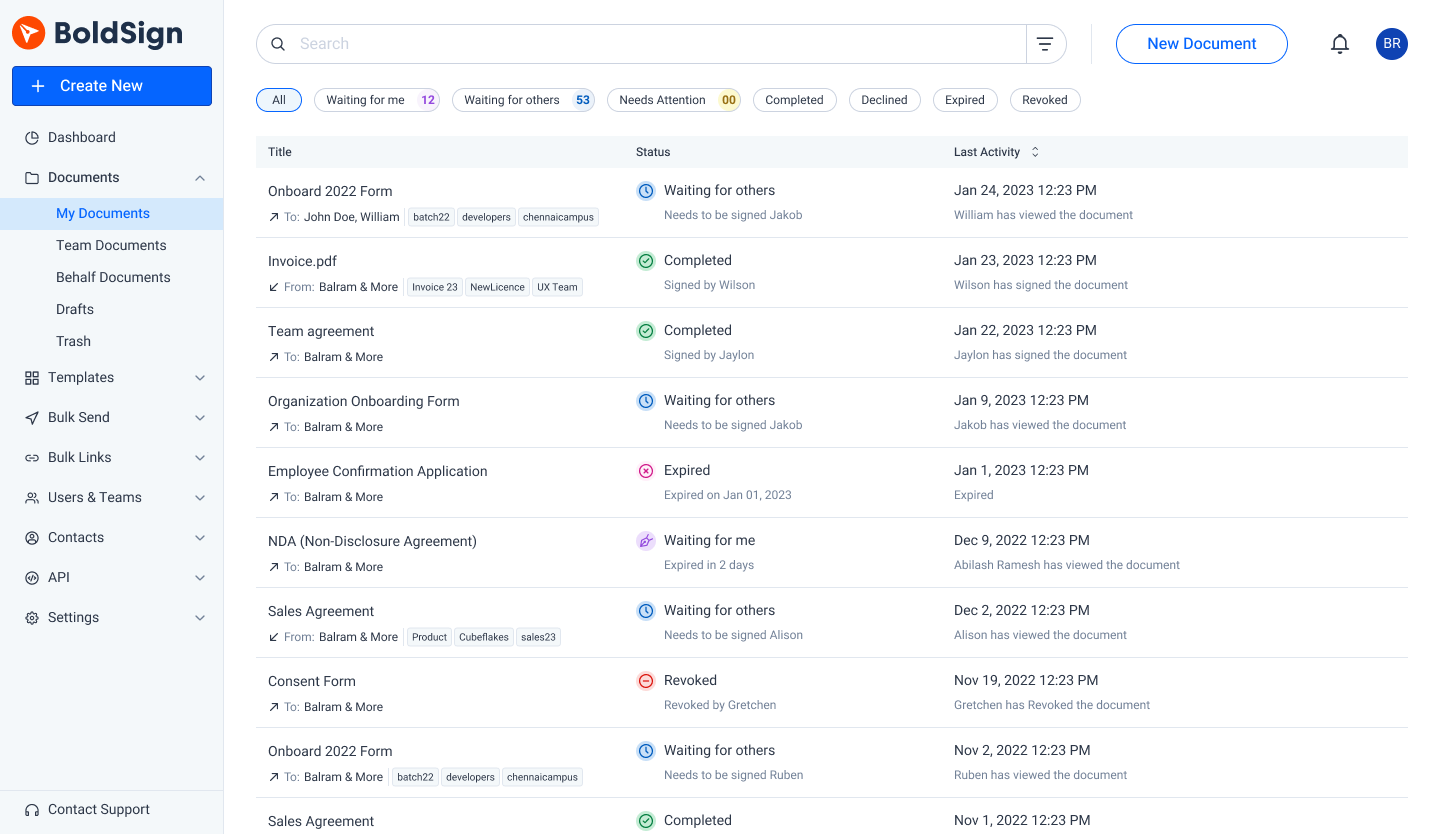
A centralized workspace that gives users immediate visibility into document status, recent activity, and pending actions.
Impact: Reduced time spent locating documents and improved workflow visibility.
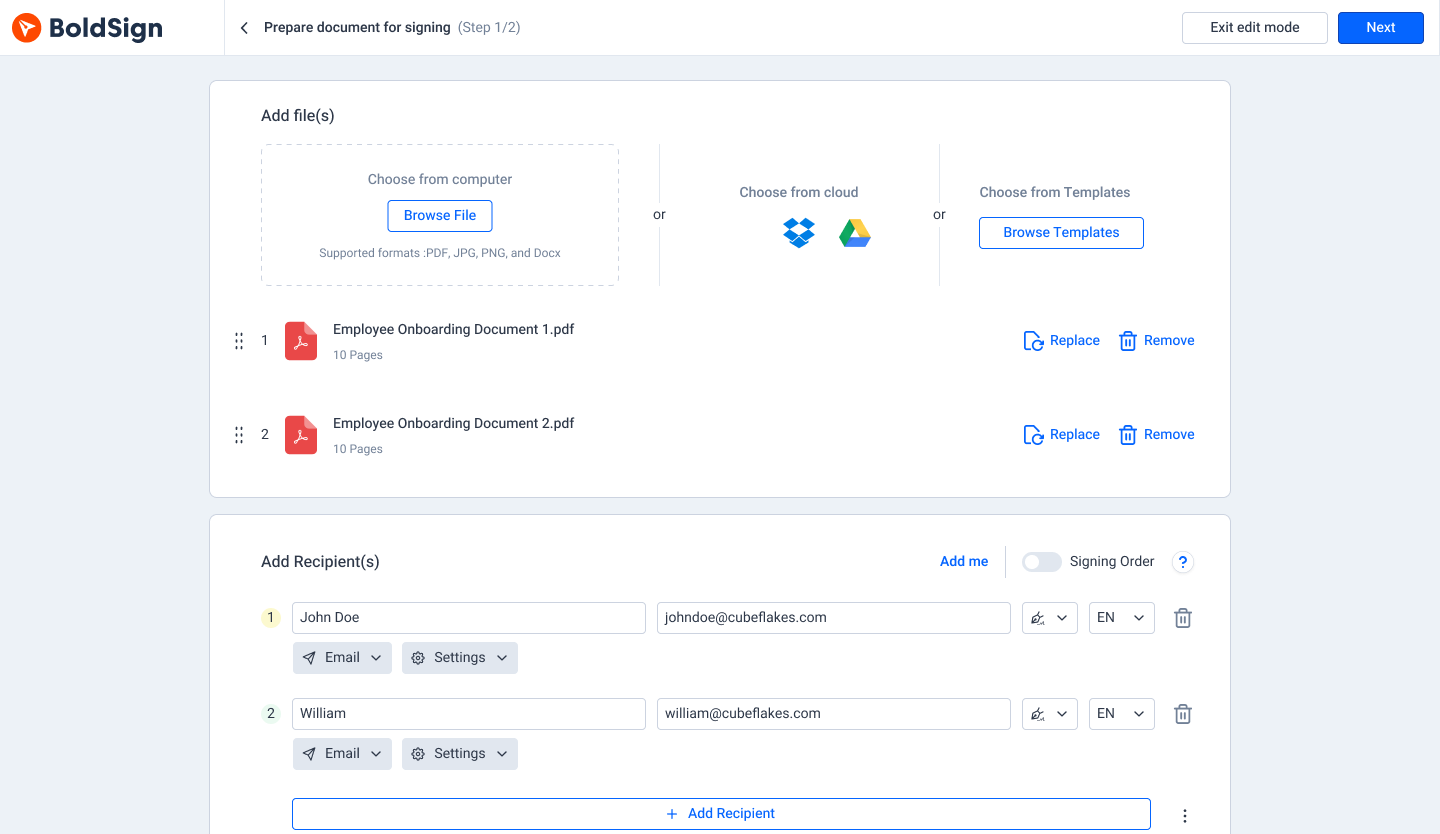
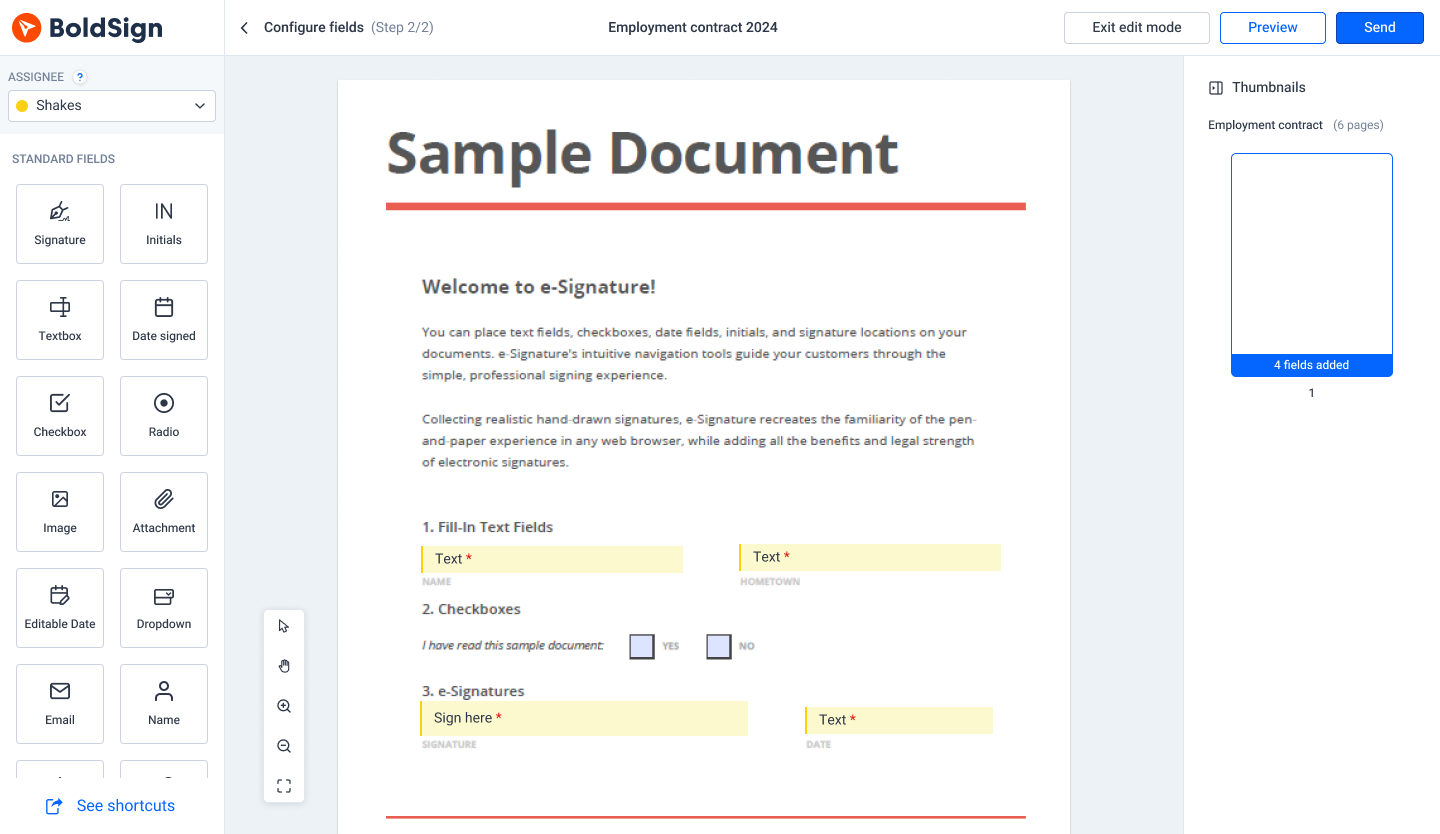
A guided document preparation experience that simplifies uploading, assigning recipients, configuring signing order, and placing signature fields.
Impact: Made document preparation faster and more intuitive.
Reusable templates for recurring agreements.
Impact: Reduced repetitive work and improved consistency across teams.
Scalable administration tools for managing users, permissions, and organizational settings.
Impact: Improved administration for growing organizations.
Custom branding options for emails and signing experiences.
Impact: Helped organizations deliver a more consistent customer experience.
Reorganized configuration into clear, logical categories.
Impact: Reduced navigation complexity for administrators.
BoldSign was built using Syncfusion's existing design system.
I collaborated with engineering to extend reusable components where necessary while maintaining consistency across the product.
The design system enabled:
Throughout the project, I partnered closely with Product Managers to prioritize features, collaborated with engineers during implementation, and worked with QA to ensure the final product matched the intended experience.
Regular design reviews helped align business goals, user needs, and technical constraints throughout development.
The project established a cohesive enterprise experience that improved efficiency across key document workflows.
OutcomesDesigning BoldSign reinforced that enterprise software isn't about adding more features — it's about making complex workflows feel effortless.
By focusing on the most frequent user tasks, simplifying navigation, and designing reusable patterns, we created a product that balanced enterprise capability with everyday usability.